Today, we will focus on Economics, which ultimately became a passion of mine. I was in my final year of college, earning a Bachelor of Science degree in Biology, I had an extra semester available to take elective classes outside of my major. So, I talked with a school counselor, and she suggested I take some business classes to round out my degree. I looked at all the classes available and found that taking seven Economics classes interested me the most. 21 credits were a lot for one semester, but I felt I could do it. So, I did.
While I was lucky to have always been a pretty fast learner, I found that economics came easy to me. It seemed so intuitive as to be almost obvious. Yet, other students in my classes did not seem to think so. Several of the classes were graded on a curve and my scores were routinely thrown out, since they were much higher than anyone else. I easily achieved all A’s in the seven classes.
This made me rethink my career choices. I decided to get a master’s in economics from Clemson University and then later an MBA in finance from The University of Michigan. Both schools taught me to understand economics in a simple, non-jargonistic way. I used what I learned in economics every day in the business world and ultimately worked my way up from the lowest staff levels all the way up to the CEO of a billion-dollar health insurance subsidiary. I used Economics in almost every decision I ever had to make and it worked.
Over time, I will provide the insights I arrived at, both in terms of economics, but also in terms of leadership and guiding organizations to surpass their goals, sometimes by a wide margin. Over time, I will point out specific examples from what my teams accomplished and learned, but also how individuals or companies were successful (or failed to be due to faulty understanding of these two key areas). I will also present a rather unique way of looking at the business world that will hopefully provide you with additional options in support of making better decisions.
Why Does Economics get a bad rap?
Well first, anyone can call themselves an economistAn economist is someone who More. Sure, you can read an article or take a class and feel that you understand all the major nuances of the science of economics (and it is a science as I describe below). But what is taught in introductory classes or written on a popular website is often broken down into arguments that reflect the bias of the writer and not the science. Even people who have advanced degrees in economics often get the science part wrong or cannot explain it in non-technical terms. Additionally, once an economistAn economist is someone who More becomes a politician or a bureaucrat, they often lose their ability to be objective, especially when the science part goes against their pre-existing opinions or their political base.
In September of 2007, Federal Reserve Chairman Alan Greenspan did an interview on CNBC1 about the potential for a recession in the US. CNBC noted that he spoke in something they called Fedspeak, meaning that it was difficult to understand him because he used so much jargon and technical terms. But one thing he said clearly, albeit somewhat tongue-in-cheek, was that he believed there was a 42.35% chance of a recession in the near term.
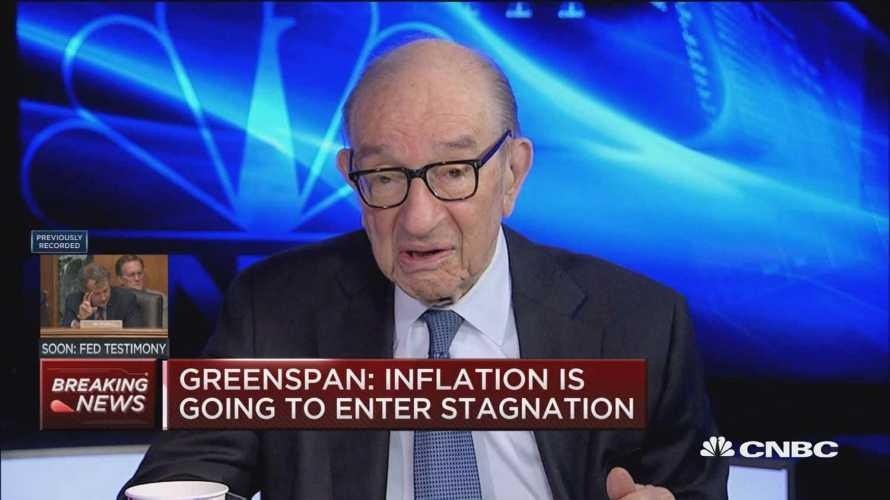
My brother-in-law, Rick, called me after he saw the show. Rick said that his company’s future orders had dried up and asked me if I agreed with Greenspan’s assessment. I said no and that I thought it was highly likely we were already in a recession or would be soon. Rick asked how Greenspan, with all his staff, his advanced degrees in Economics and access to complex models could be so far off.
I said that was because he was no longer an economistAn economist is someone who More but was now a politician. Greenspan was ether not a good forecaster in the first place, or he was a good forecaster but felt he could no longer speak honestly, given his role. In December 2007, The Great Recession began. Greenspan was woefully inaccurate.
Economists gather data, create models to explain the world or to make predictions about the future. Some economists are data nerds. Others are great at explaining how the world works in simple terms. Still others are great at predicting the future. Most economists are good at two of these activities. For me, I am a data nerd and like to simplify a complex world down to its basics. I am good but not great at predicting the future unless it is in a straightforward area like the Greenspan example above.
When an “economistAn economist is someone who More” writes in social media or does an interview on TV or a podcast, how do you know if they are a bad, good, or great economistAn economist is someone who More? You do not unless you do significant research. Let me just say that I have seen many bad economists in the media.
A second area that causes confusion in people who are not economists is when the economistAn economist is someone who More blurs the difference between opinion and science. In the arcane world of economics, this is known as separating positive from normative economics. Positive economics is simply the science of economics while normative economics is using your opinion to decide what should be done, say from a policy perspective. Here is an example.
Let’s say that you complete a study on the impact of raising the minimum wage by 10% in the restaurants surrounding Detroit, Michigan. You find that for the affected population (those making the minimum wage working in a restaurant in the Detroit area), there will be a 4% reduction in the number of people employed in that population. That is positive economics (the science), assuming you did proper data gathering and modeling. So, should the minimum wage be implemented?
One group might argue that you should, since 96% of the affected population will get a raise. Another group might say that you should not since 4% of the population will lose their jobs and who knows if they will ever be able to find another equally good job. Who is right?
These last arguments come down to opinion, and you might not be able to convince either side that their opinion is incorrect. There is no science that will break that kind of tie. It is an opinion based upon your value system.
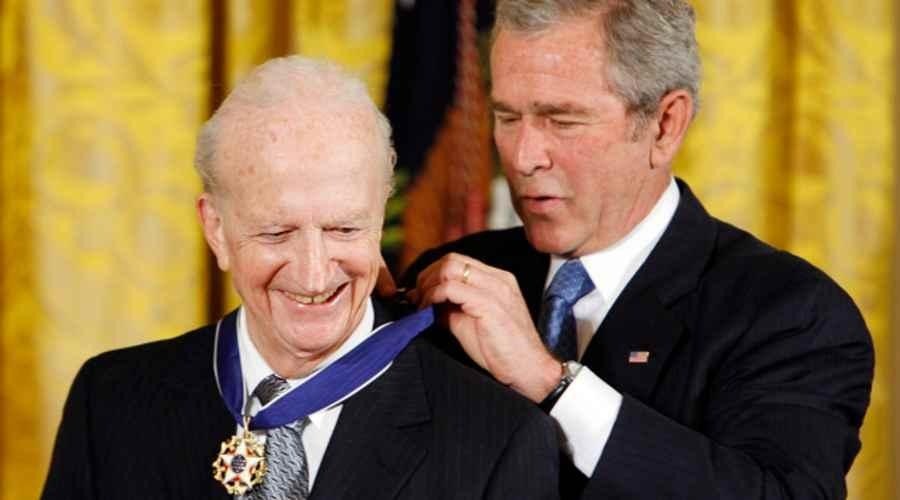
My favorite economics journal article required in graduate school was written by two Nobel Prize winners: Gary Becker and George Stiglitz. The inconvenient title of the article was “De Gustibus non Disputandum.” 2 The title loosely means, when your argument with someone else gets down to a matter of taste or opinions, just stop arguing. While I don’t always agree with that proposition, it is true that the argument may get highly emotional once you have stopped talking about the science.

Economics also gets a bad rap due to inefficiencies in data reporting. Recently, there has been a great deal of discussion about the Bureau of Labor Statistics’ (BLS) unemployment numbers. Think of the complexity in trying to calculate unemployment. The first number the BLS must calculate is how many people are currently in the Labor Force. These are people actively looking for a job. But there are 330+ million people in the United States. It is not practical or cost effective to try and reach out to all of them each month. So, the BLS uses a survey by contacting 60,000 households to estimate the labor force number. This sounds like a small sample but go ahead and try to get 60,000 people to answer any survey, let alone answer one truthfully every month. Many people would be uncomfortable saying they are not working and not looking for work so getting accurate numbers is difficult. They also ask how many people are working from that same sample. Unemployment is then calculated as the number of people unemployed who are actively looking for work divided by the total labor force.
So, right away there are two problems: Using a sample and not the whole population and relying on humans in that sample to give you truthful information.
If the BLS were transparent and if the media did their job, we would know what adjustments are made to the data and why they were made. The BLS and the media would also report on the error of their results since any survey has an estimated error attached to it (more on that in a future blog). But transparency in general and specifically error estimates are not something that the BLS or the media often discuss.
One other way that economics gets a bad rap is due to the very nature of the discipline. Economics is interested in looking at the tradeoffs that occur when we allocate scarce resources. It should be obvious to everyone that politicians and voters hate to think about tradeoffs. These two groups would much rather believe that you can allocate resources with no pain or cost to anyone.
As someone who has always been concerned about nature, I worry about diminished populations of fish, lobsters and crabs. So why not just ban fishing of those species that are diminished? The tradeoff is that the people who fish for a living, the people who transport the fish and other species, and the people who do wholesale and retail sales are all affected by any decision that reduces the number of fish caught. Well, we could just compensate them. But that money could be used by someone else for perhaps an even better reason. And so on. Economics makes us think about these tradeoffs which then make us feel uncomfortable. Surely, we are rich enough to have everything. Well, no. There is still no such thing as a free lunch.
There are also times when markets seem to make no sense when pricing goods and services. One of the classic examples was the Tulip mania in Holland in the 17th century. Holland was going through a relatively prosperous period
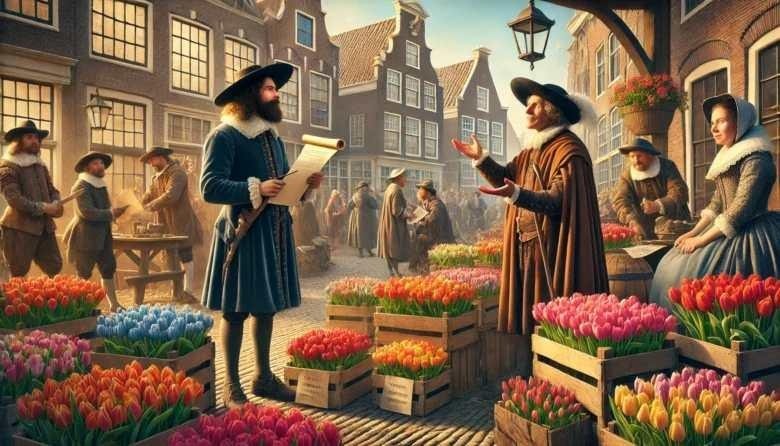
and so luxury items became much more obtainable. Tulips, especially those special varieties coveted by collectors, became one such luxury item where the pricing went literally through the roof. Many single Tulip bulbs were bought for a price that could pay a skilled tradesman an entire year’s worth of work. There were even a couple of examples where the price of a bulb was greater than a nice house!

Fast forward to the year 1983. A weird group of dolls known as Cabbage Patch Kids had come onto the market years before, but now, they were all the rage. Kids demanded that their parents buy them. With a limited supply, prices started creeping up from $12 a doll to over $50. There were even clashes amongst parents to get the most coveted of the dolls. On the black market, prices sometimes approached $2,000. All for a doll that costs a couple of bucks to make.
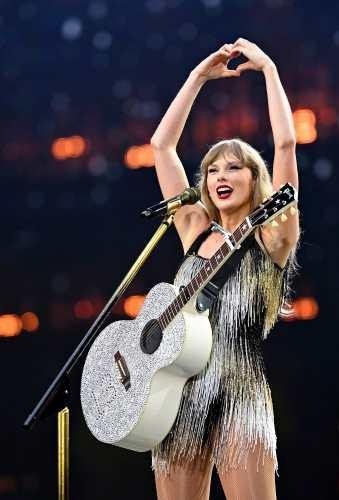
My final example involves the music icon, Taylor Swift. Whether or not you like her music (I do), she is one of the most popular entertainers in the world. Her concert tickets have become prized possessions. In fact, on StubHub TM and Ticketmaster TM, some of her tickets went for as much as $11,000 for roughly a two-hour show in recent years.
Whenever supply is constrained for very desirable items, prices can explode to what most normal human beings think is absurd. But think of it this way: If someone pays $11,000 for a Taylor Swift ticket or $2,000 for a doll, it is only because they view the value of the item or service as greater than what they paid!
To be a good or a great economistAn economist is someone who More or even just to understand the world in a deeper, more nuanced way, you must forget about what you personally would be willing to pay for such items. As long as one person is willing to pay an outrageous amount, then some seller will seek out that buyer and make them an offer they cannot refuse.
Since economics entails the actions of people, who are predictable by nature, many believe that it cannot be thought of like other sciences. Surely, you could never perfectly predict what large populations of undisciplined people will do?
Due to some of the things we have discussed thus far, most hard scientists do not believe that disciplines such as economics are as rigorous as physics, chemistry, biology or even math (there are arguments on both sides about whether math is a science). But let’s look at that fallacy.
As we saw earlier, Alan Greenspan jokingly said that there a 42.35% chance of recession in 2007 (he knew his models were not that precise). This implies we do not know with certainty what will happen. Also, economists in many cases use surveys whose accuracy depends upon the randomness of the sample, the wording of the questions and how honestly respondents answer questions of a personal nature. In addition, there are many theories about how the economy works. Followers of various models are called Keynesians, Supply Siders, Monetarists, Socialists, Communists and Classical Economists (we will discuss these all in a future blog). How can you have a science where you can’t even have agreement on which major model is correct?
To answer this question, I refer to the various scientific models of one of my favorite hobbies: physics.
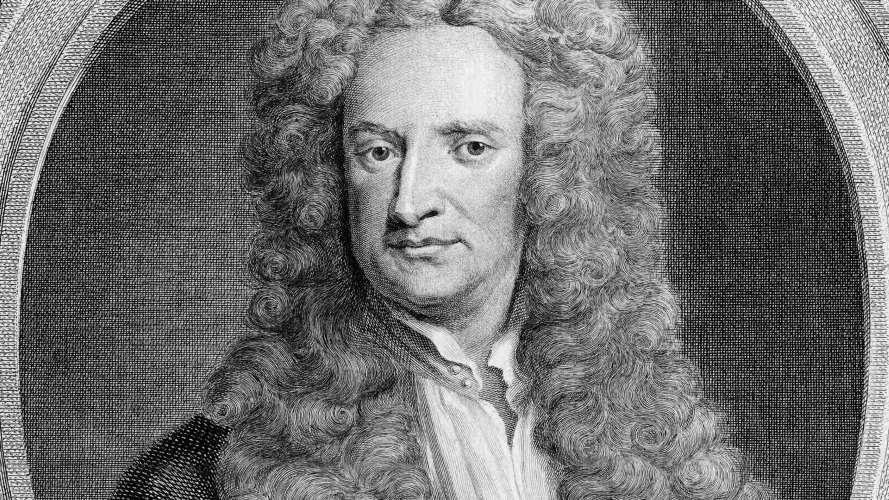
Sir Issacc Newton was a brilliant 17th Century physicist and mathematician. He helped develop calculus to enhance his work on gravity, which has usually been called the Law of Universal Gravitation.
The Law of Universal Gravitation was designed to show how bodies with any mass are affected by each other.
The Law of Universal Gravitation was designed to show how bodies with any mass are affected by each other.
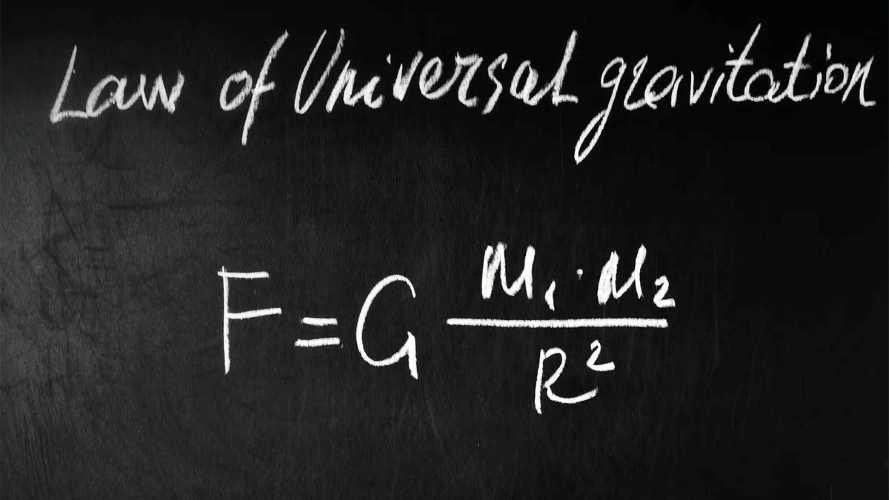
It was known at the time that it was not 100% accurate (it could not exactly explain Mercury’s orbit around the sun, for example). So, since I love physics, I will give it pass when its physicists called something a law when everyone knew it could not explain all bodies in motion, but I digress.
Albert Einstein then came up with the Theory of General Relativity in 1905, which overcame the problems that plagued Newton’s Law.
The Law of Universal Gravitation and the Theory of General Relativity both break down at the atomic and subatomic level. Atoms do not behave the way planets do. So, physicists created Quantum Mechanics. But Quantum Mechanics does not explain how larger bodies move, only very, very small ones.
So, we created String Theory with the desire that one day it might result in a true universal law of gravitation. But, to date it has not. Is physics not a science because it, like economics, has multiple models to describe how things work? I would argue, no, both are sciences because they use the scientific method and as a result, get a little more accurate and explain things a little more thoroughly over time.
But what about the use of estimates and probabilities in Economics? Does that not prove it is not a science?
If you go to an oncologist, does he or she say that if you take radiation, it will absolutely 100% cure you of your cancer? Of course not, the oncologist will only tell you that there is a 40%, 60% or 80% chance of curing you depending on the treatment and prognosis.
I have a good friend who is an anesthesiologist. He is one of the smartest people I know. He once told me that one of the reasons he finds his job so interesting is that every single patient might react a little differently to the same anesthesia. Does that mean medicine is not a science? No, not at all.
I explain why economics gets a bad rap not to say that all the criticism of it is unfounded (much certainly is), but to show that some of the criticism borders on hyperbole. Economics and economists have their faults.
But that is not the purpose of my blog. Over time, my blog will show how economics can be an integral part of your decision-making process, whether that decision is being made at home, at work or at your preferred place of worship, if you have one. You will not need to be an economistAn economist is someone who More to understand and use this information effectively.
My goal is to have fun writing these blogs and as a result, if you come with me on this journey, hopefully, you will have fun as well. And maybe you will take something away that you can use in a practical way as well.
De Gustibus non Disputandum
- CNBC interview with Alan Greenspan; The 42.35% Chance: A Chat with Greenspan (CNBC, September 30, 2007)
- Stiglitz, G. and Becker, G. (1977) De Gustibus Non Est Disputandum